
TABLE OF CONTENT
- 1. General
- 1.1 Microsoft Entra ID
- 1.2 Exchange Online (PowerShell)
- 1.3 sklera CMS
- 2. General notes
- 3. Further external links
1. General
Exchange Online is integrated through the Microsoft Graph API with role-based access control (RBAC).
Setup requires configuration in Microsoft Entra ID, Exchange Online (PowerShell), and the sklera CMS.
1.1 Microsoft Entra ID
1.1.1 Register App
- To set up the integration, you must register an application in Microsoft Entra ID.
Go to the Microsoft Entra admin center: https://entra.microsoft.com.
In the portal, navigate to "Entra ID > App registrations" and select "New registration".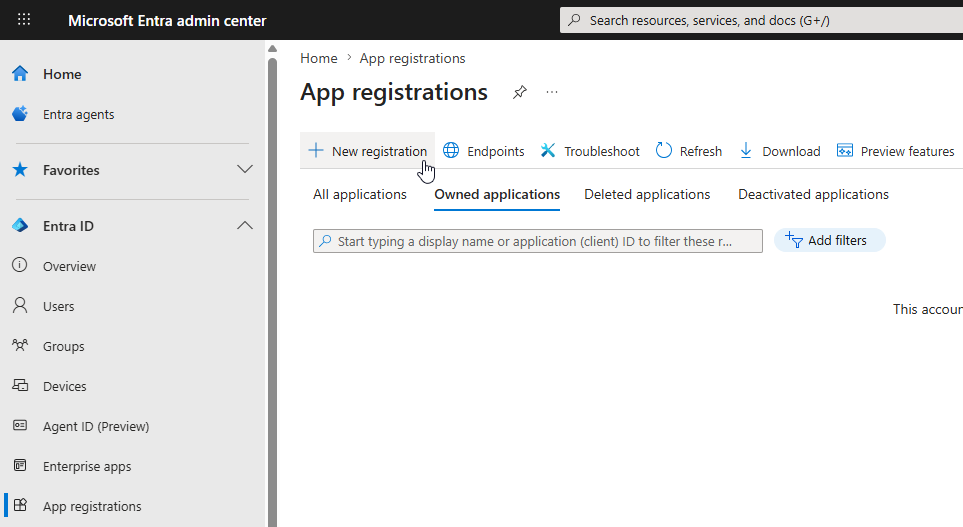
- Enter a name for your app and specify the appropriate redirect URI. Then click "Register".Info
Use the following format for the redirect URI
https://REPLACE_WITH_YOUR_SKLERA_CMS_URL/oauth/microsoft/callback
Substitute REPLACE_WITH_YOUR_SKLERA_CMS_URL with the actual URL of your sklera CMS instance.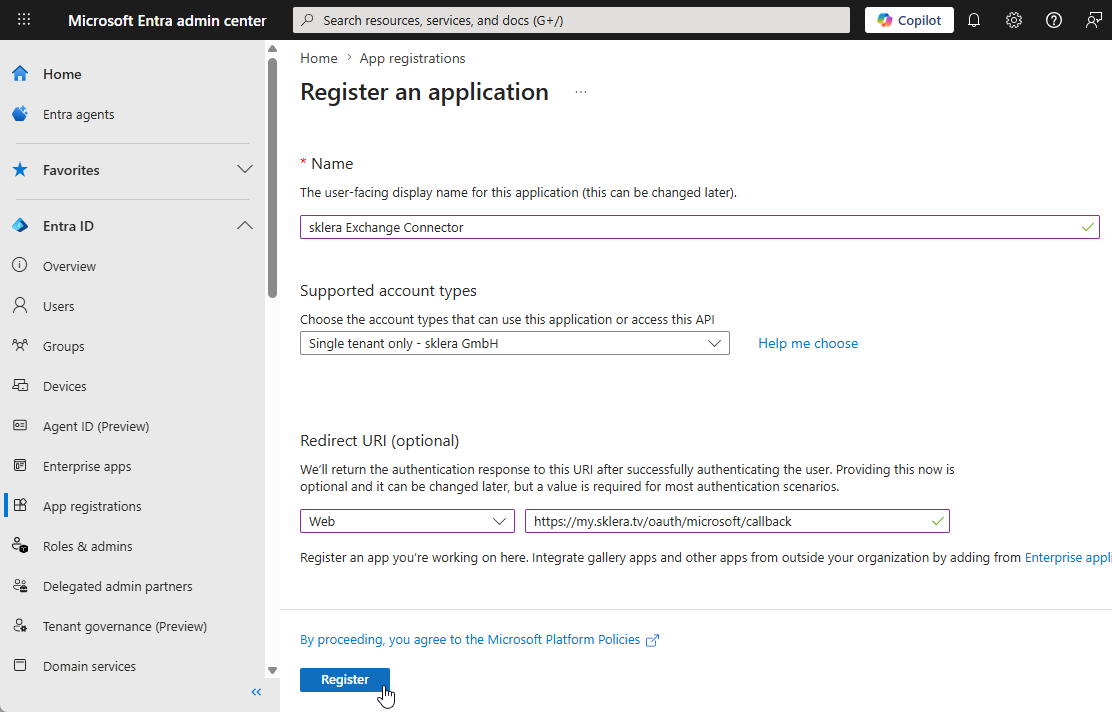
- Make a note of the Application (client) ID and the Directory (tenant) ID.
You'll need these later in the sklera Room Manager to link the calendars.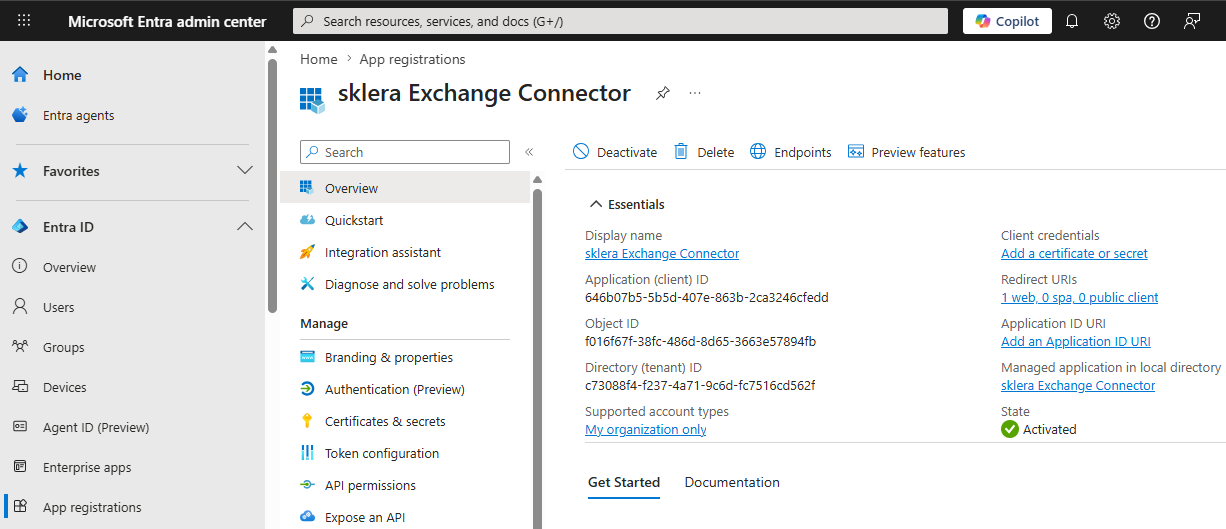
1.1.2 Create a client secret
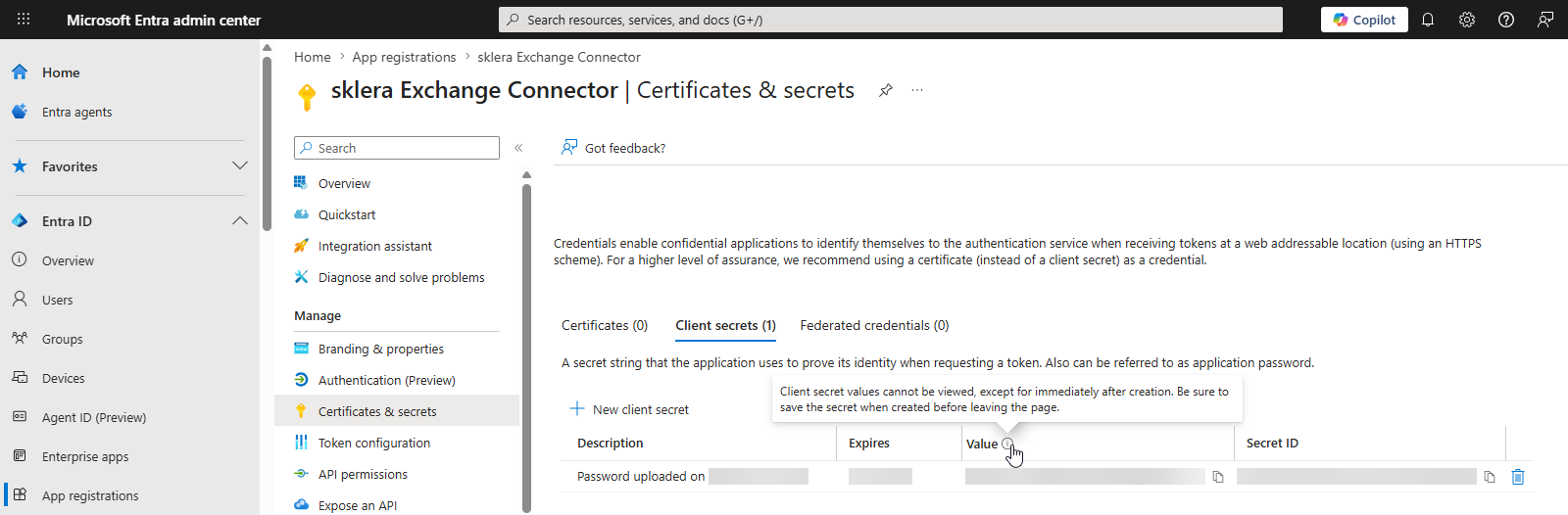
- In "Certificates & secrets", create a new client secret. Click "New client secret".
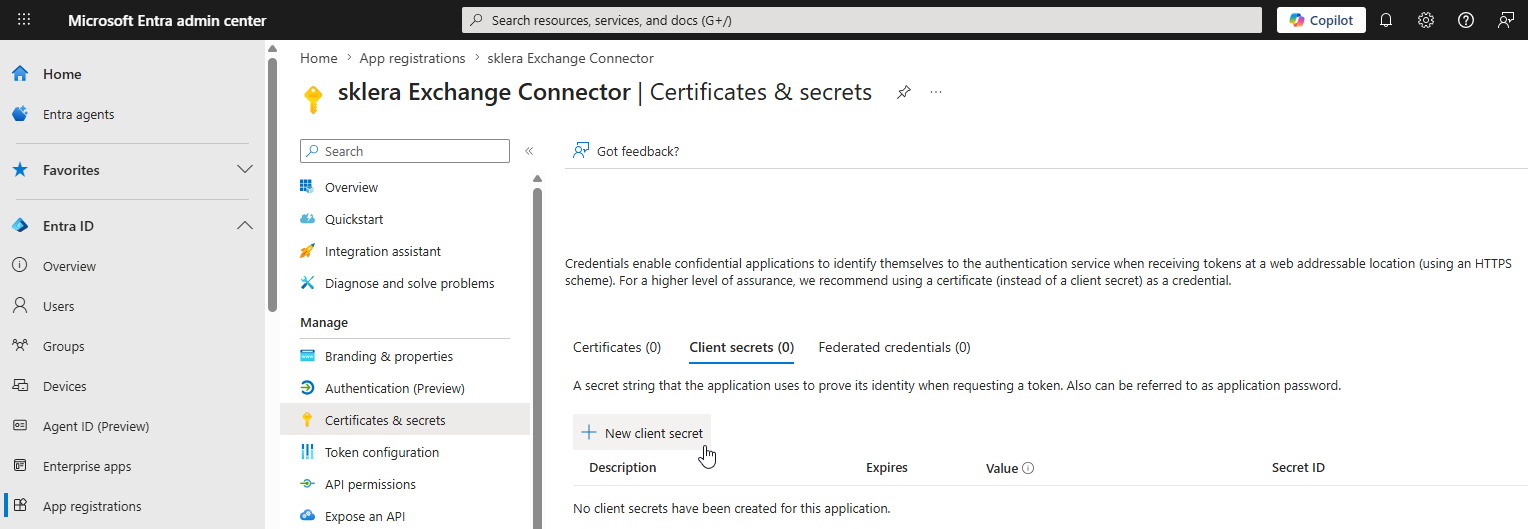
Optionally enter a description and set the expiration period.
Then click "Add".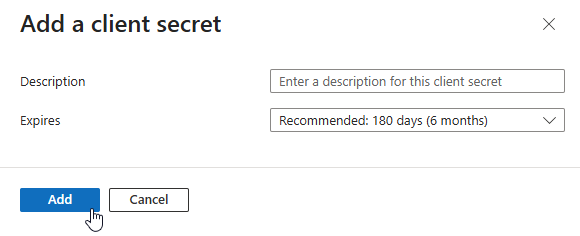
Copy the Value of the client secret. You'll need it later in the sklera Room Manager to establish the connection.
1.1.3 Note the enterprise app properties
- Select "Enterprise apps" and locate your app (for example, sklera Exchange Connector).
Copy the Application ID and Object ID. You'll need these later in Exchange Online to create a service principal.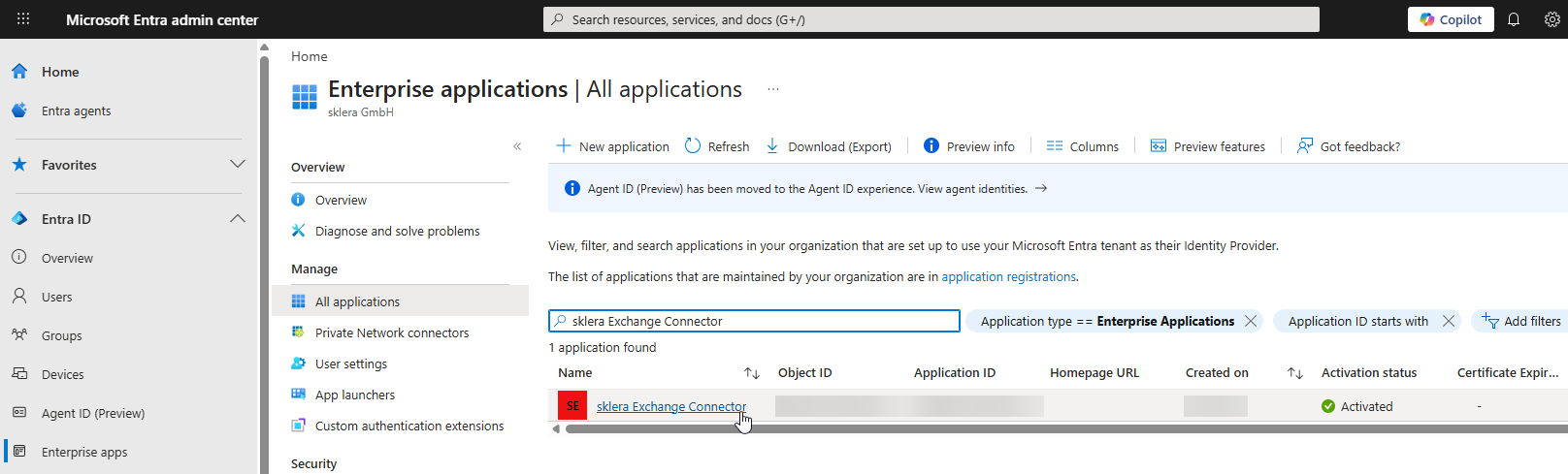
1.1.4 Add API permissions
To add rooms graphically in Room Manager, the app requires access to your room lists.
If the required API permission (Place.Read.All) is not granted, new rooms can only be added by entering the SMTP address (Input Room Address). Graphical selection is not available in this case.
Example of graphical room selection: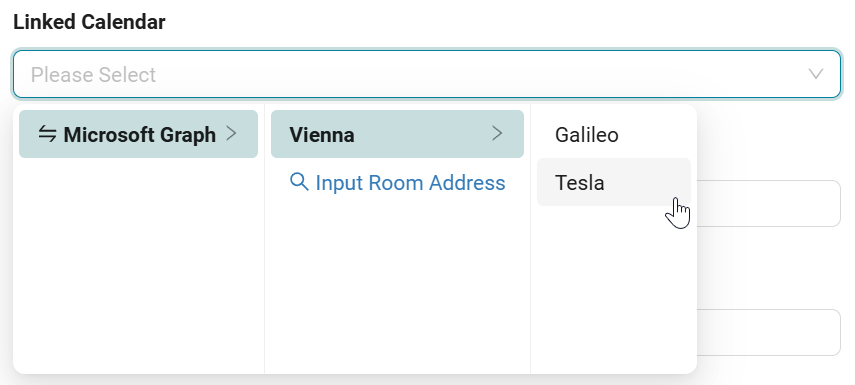
If you don't use room lists or don't want to grant the API permission, you can proceed directly to section 1.1.5.
Otherwise, complete the following steps to grant the permission:
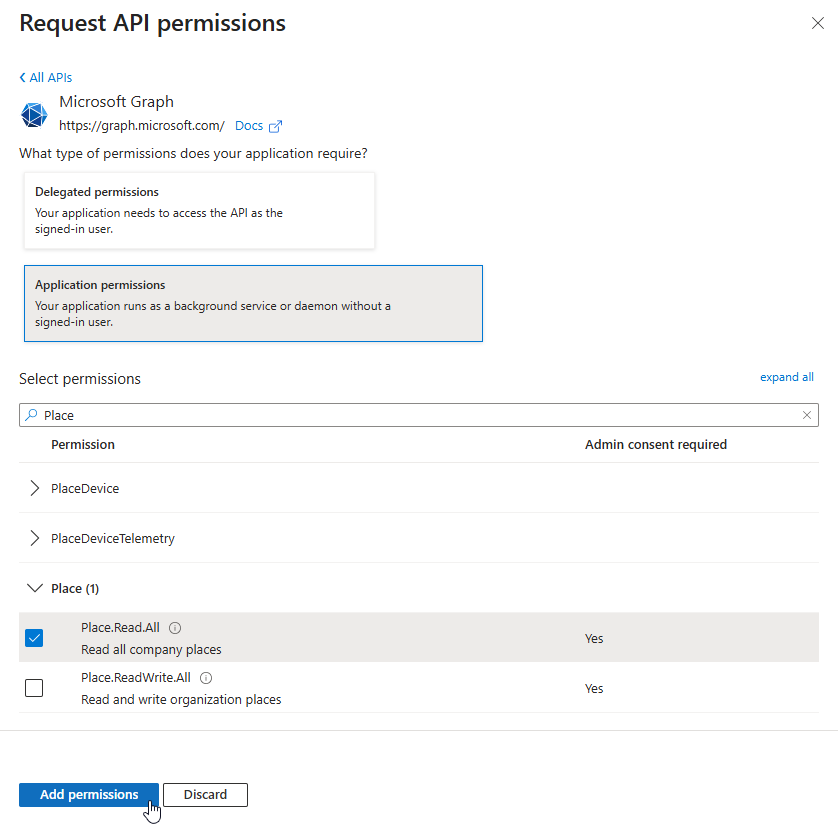
- Go to "API permissions".
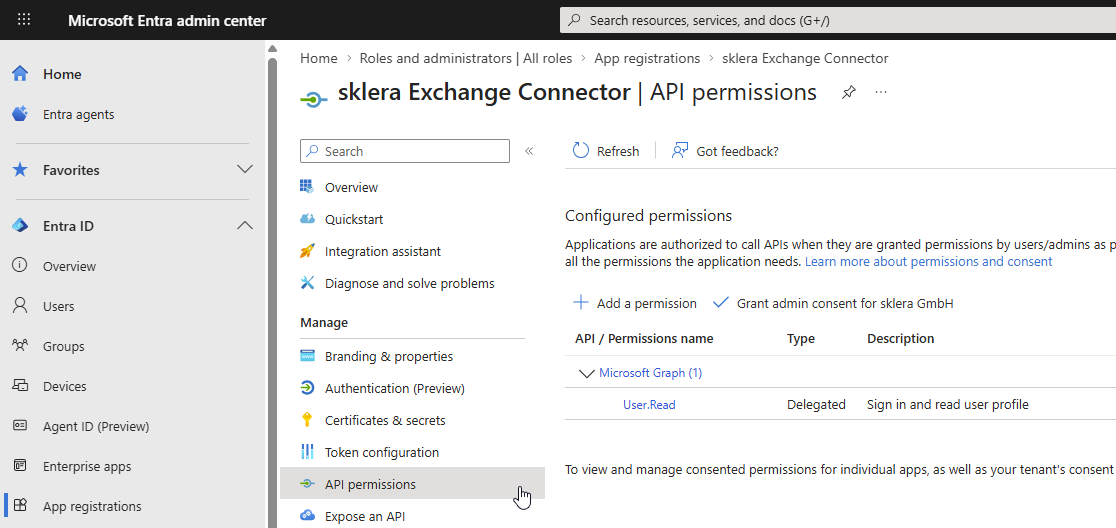
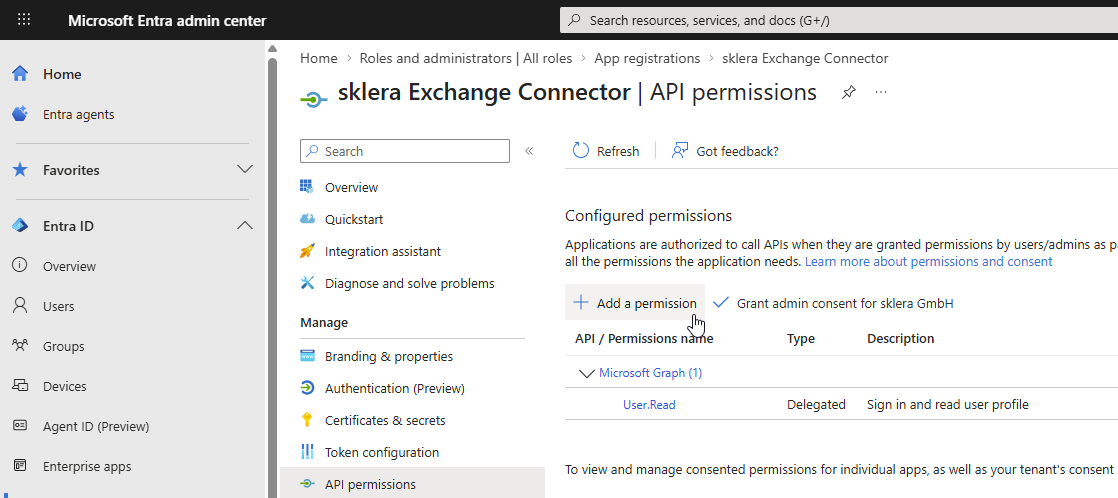
- Click "Add a permission".
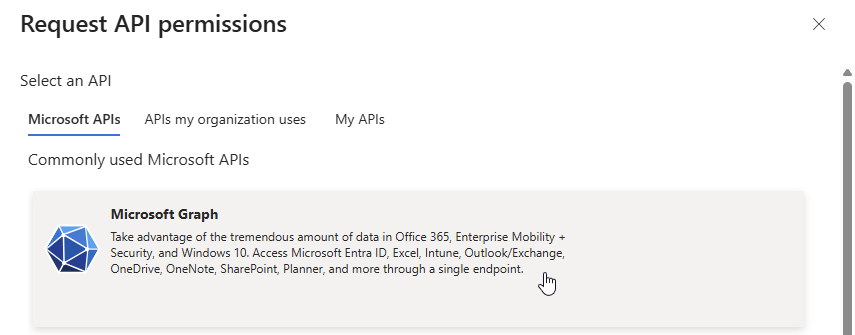
- Select "Microsoft Graph".
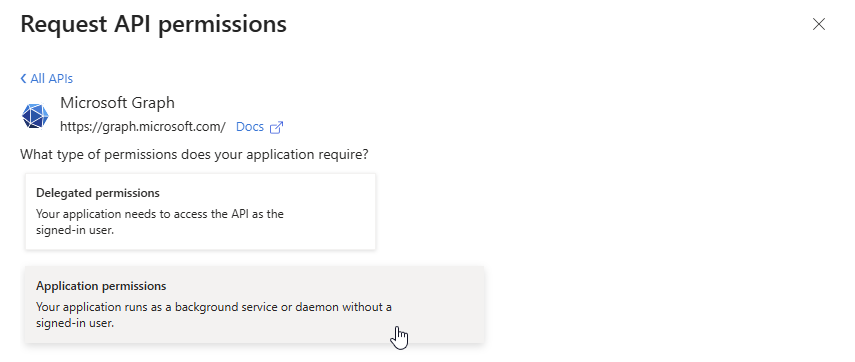
- Select "Application Permissions".
- Search for "Place", select "Place.Read.All", and click "Add permissions".
1.1.5 Configure access permissions for room mailboxes – Part 1/2
The sklera Room Manager can access only mailboxes that are members of a specified security group or that are included in a defined management scope. Access to other mailboxes is not possible.
To configure this, a security group or a management scope must be created, and the required role (permission) must be assigned by using a management role assignment.
| Option | Note |
| A: Security group or B: Management scope | Simple method, recommended for most customers. |
Advanced method, for specialized requirements. |
| Role (permission) | Purpose | Note |
| Application Calendars.ReadWrite or Application Calendars.Read | Read and write access to calendars | Required if the Room Manager will create, modify, or delete appointments in Exchange (return channel). |
Read access to calendars | Sufficient if only read access to appointments in Exchange is required (no return channel). |
Important
Changes to permissions in Microsoft Entra ID may take some time to take effect due to replication and caching.
Option A (simple method, recommended for most customers – security group)
With this option, access permissions are controlled through the room mailboxes' membership in a security group.
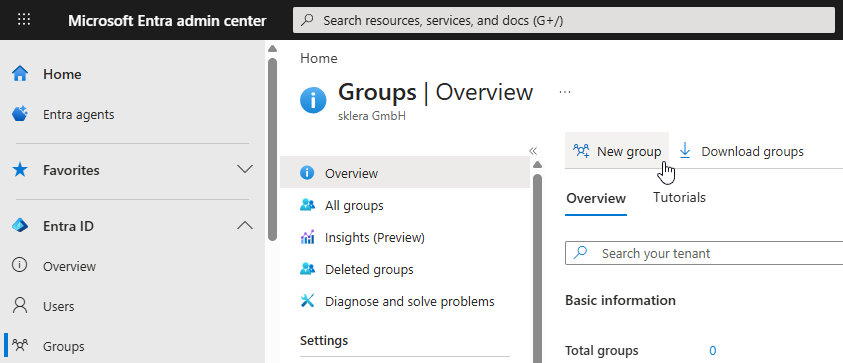
- Create a new security group by going to the "Groups" menu and clicking "New group".
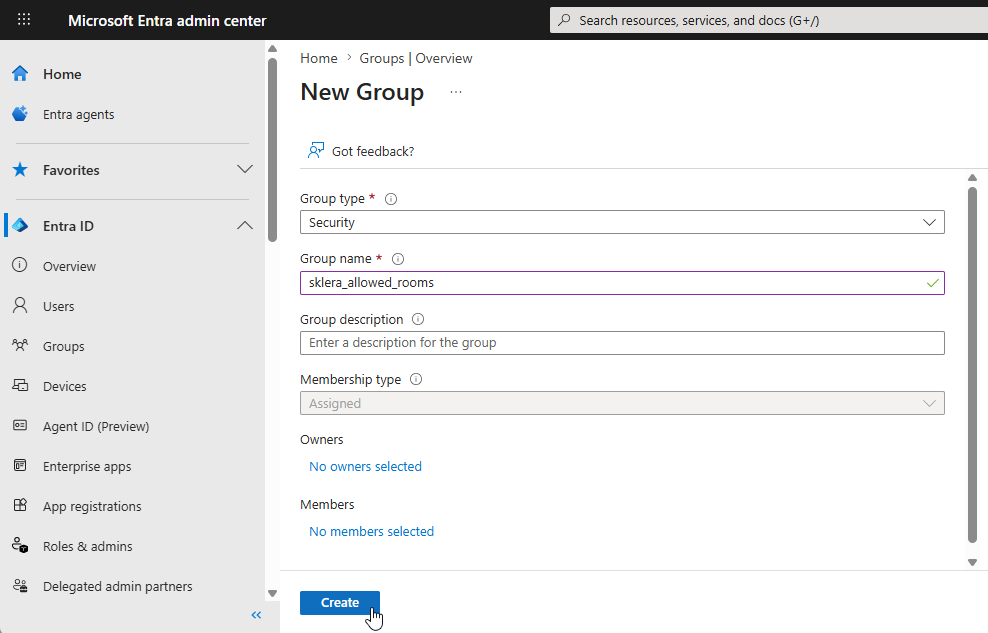
- Enter a name for the security group, and then click "Create".
- Go to "All groups" and select the security group you just created.
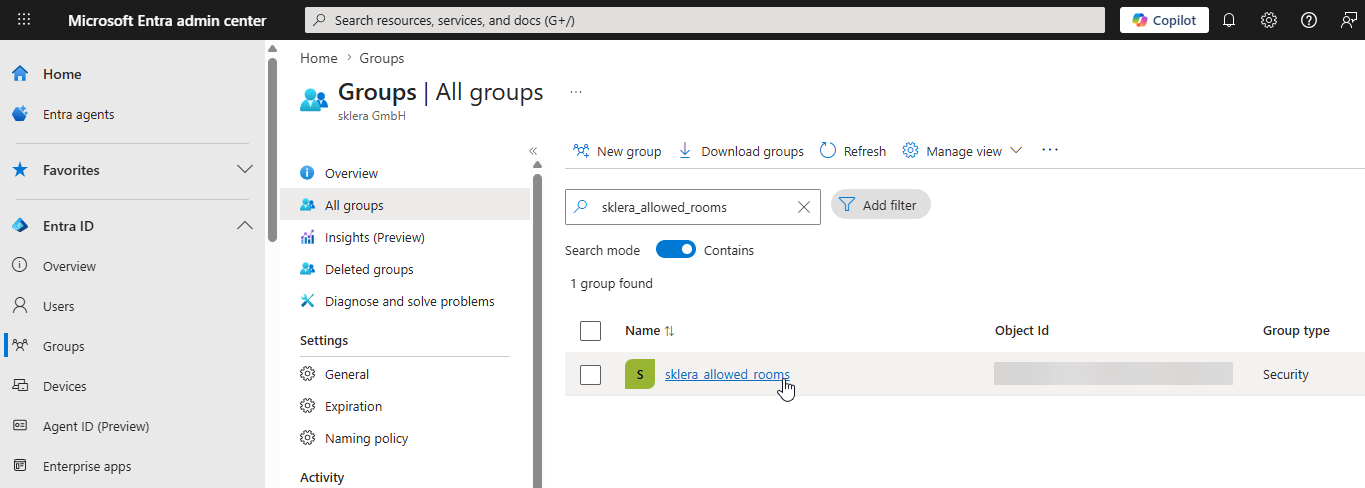
- Note the Object ID. You'll need it later in the Exchange Online (PowerShell) section to create a management role assignment.
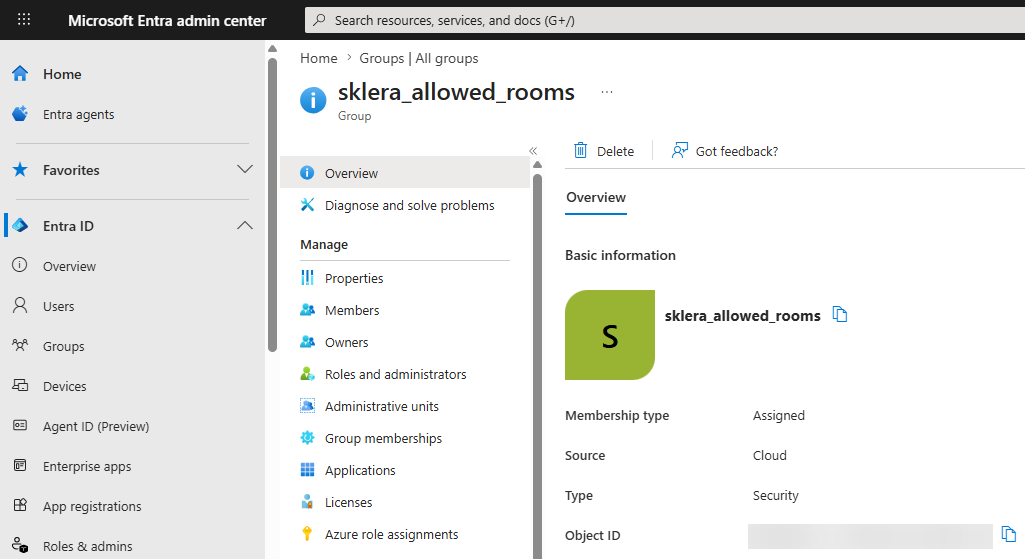
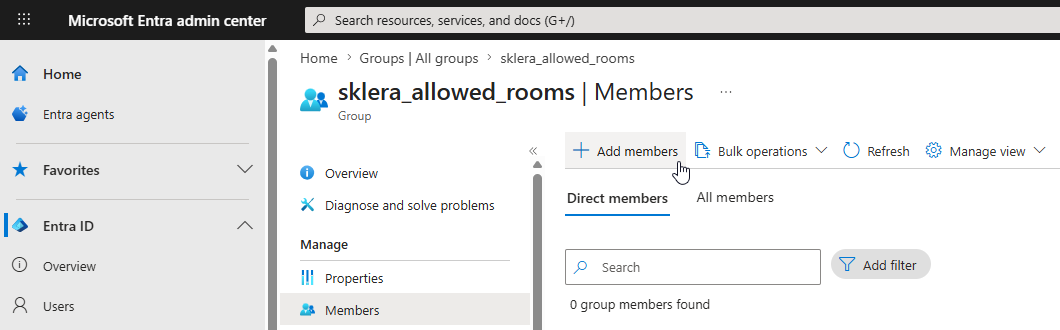
- Go to "Members" and click "Add members".
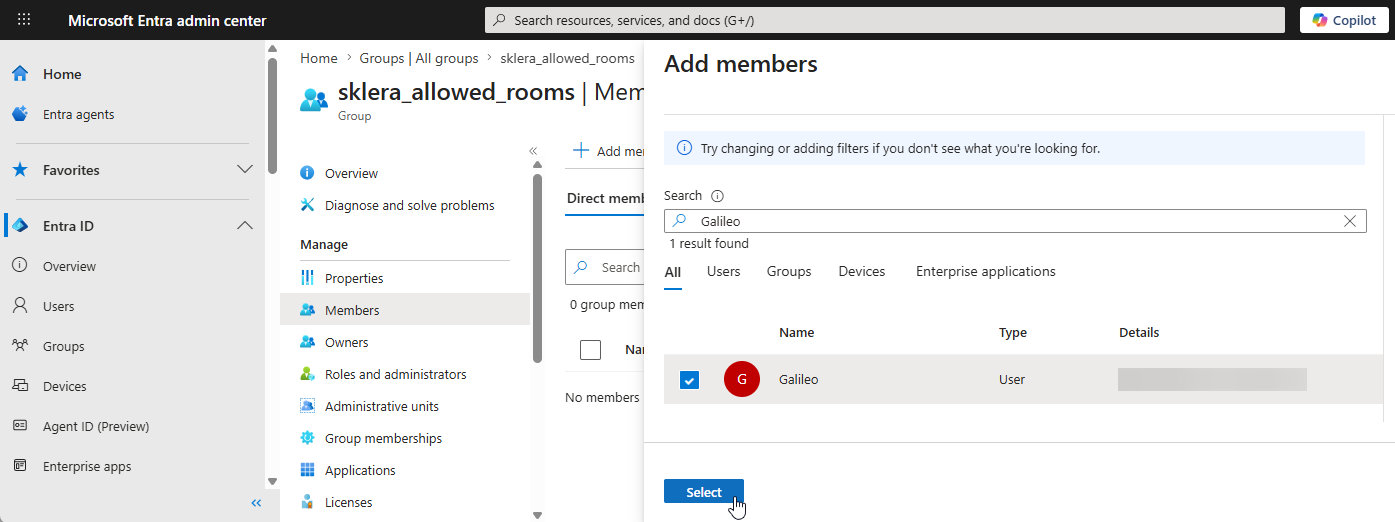
- Search for the rooms you want to add, and then click "Select" to add them to the group.
Option B (advanced method, for specialized requirements – management scope)
With this option, access permissions are controlled through the room mailboxes' membership in a management scope.
The management scope can be defined based on any attribute (for example, mailbox type, alias, or location).
Setup is done exclusively through PowerShell and is described below.
1.2 Exchange Online (PowerShell)
1.2.1 Connect to Exchange Online
- Open PowerShell and connect to Exchange Online.
Connect-ExchangeOnline
1.2.2 Create a room list
To add room mailboxes graphically in the sklera Room Manager, they must be added to a room list. If no room lists exist, new rooms can only be added by entering the SMTP address (Input Room Address). Graphical selection is not available in this case.
You can use the following PowerShell commands to create room lists and add the desired room mailboxes.
- Create the room list "Vienna":
New-DistributionGroup Vienna -Type distribution -RoomList
- Add the room mailbox "Galileo" to the room list "Vienna":
Add-DistributionGroupMember -Identity Vienna -Member galileo
1.2.3 Create a service principal for your app
- To assign the required permissions via a management role assignment, you must create a service principal in Exchange Online.
New-ServicePrincipal -AppId aaaaaaaa-aaaa-aaaa-aaaa-aaaaaaaaaaaa -ObjectId oooooooo-oooo-oooo-oooo-oooooooooooo -DisplayName "skleraExchangeConnector"
| Parameter | Description |
| -AppId | The Application ID of your enterprise app from the "Enterprise apps" menu. |
| -ObjectId | The Object ID of your enterprise app from the "Enterprise applications" menu. |
| -DisplayName | Any name for the service principal. |
1.2.4 Configure access permissions for room mailboxes – Part 2/2
Continuation of Option A (simple method, recommended for most customers – security group)
The required role (permission) is assigned through a management role assignment and limited to the members of the security group
- Create a management role assignment
New-ManagementRoleAssignment -App oooooooo-oooo-oooo-oooo-oooooooooooo -Role "Application Calendars.ReadWrite" -RecipientGroupScope ssssssss-ssss-ssss-ssss-ssssssssssss -Name SKLERA_GRAPH_CALENDARS_READWRITE
| Parameter | Description |
| -App | The Object ID of your enterprise app from the "Enterprise applications" menu (this matches the Object ID of your service principal in Exchange Online). |
| -Role | Application Calendars.ReadWrite or Application Calendars.Read. |
| -RecipientGroupScope | The ID of the security group you created earlier. |
| -Name | Any name for the management role assignment. |
Continuation of Option B (advanced method, for specialized requirements – management scope)
In the following example, a management scope is created that includes all mailboxes of type RoomMailbox whose alias starts with room-at-.
- Create a management scope
New-ManagementScope -Name "sklera_allowedRooms_scope" -RecipientRestrictionFilter "RecipientTypeDetails -eq 'RoomMailbox' -and Alias -like 'room-at-*'"
Note
You can customize the command with your own filters as needed.
See also:
https://learn.microsoft.com/en-us/powershell/module/exchange/new-managementscope?WT.mc_id=M365-MVP-- 6771&view=exchange-ps
https://learn.microsoft.com/en-us/powershell/module/exchangepowershell/new-managementscope?WT.mc_id=M365-MVP-6771&view=exchange-ps#-recipientrestrictionfilter
https://learn.microsoft.com/en-us/powershell/exchange/recipientfilter-properties?WT.mc_id=M365-MVP-6771&view=exchange-ps
The required role (permission) is assigned through a management role assignment to the room mailboxes included in the management scope.
- Create a management role assignment
New-ManagementRoleAssignment -App oooooooo-oooo-oooo-oooo-oooooooooooo -Role "Application Calendars.ReadWrite" -CustomResourceScope "sklera_allowedRooms_scope" -Name SKLERA_GRAPH_CALENDARS_READWRITE
| Parameter | Description |
| -App | The Object ID of your enterprise app from the "Enterprise applications" menu (this matches the Object ID of your service principal in Exchange Online). |
| -Role | Application Calendars.ReadWrite or Application Calendars.Read. |
| -CustomResourceScope | The name of the management scope you created earlier. |
| -Name | Any name for the management role assignment. |
1.2.5 Test access permissions
You can use the following command to check whether the sklera Room Manager has access to the specified room mailbox.
Test-ServicePrincipalAuthorization -Identity oooooooo-oooo-oooo-oooo-oooooooooooo -Resource galileo
| Parameter | Description |
| -Identity | The Object ID of your enterprise app from the "Enterprise applications" menu (this matches the Object ID of your service principal in Exchange Online). |
| -Resource | The name of the room mailbox. |
InScope must be True for access to the corresponding mailbox to be possible.
1.3 sklera CMS
1.3.1 Sign in to the sklera CMS
- Sign in with a sklera user account that has access to the Room Manager module.
1.3.2 Connect Microsoft Graph calendar
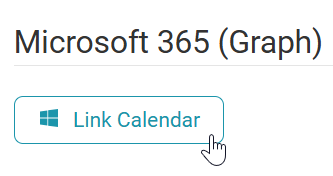
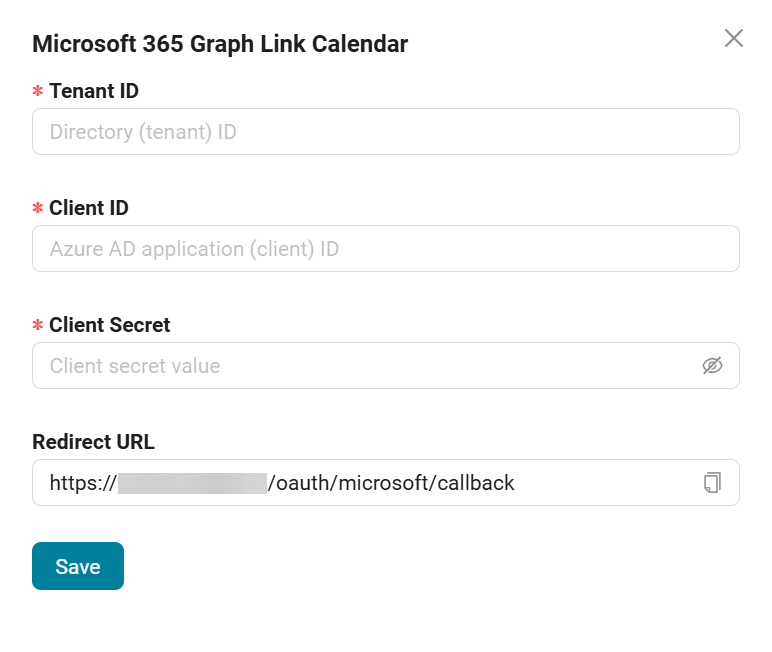
- Go to "Modules > Room Manager" and, in the "Microsoft 365 (Graph)" section, click "Link Calendar".
- Enter the Tenant ID, Client ID, and Client Secret from "Entra ID admin center > App registrations" and then click "Save"
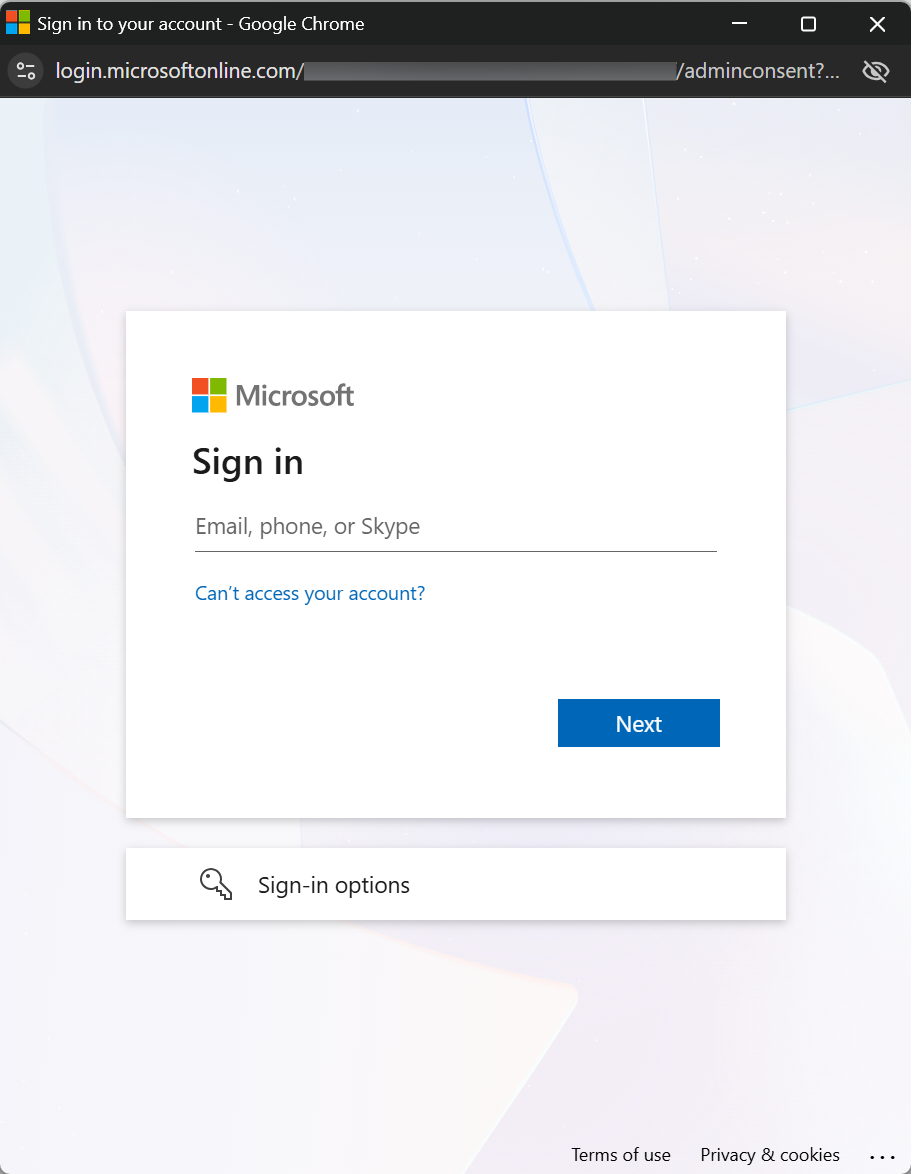
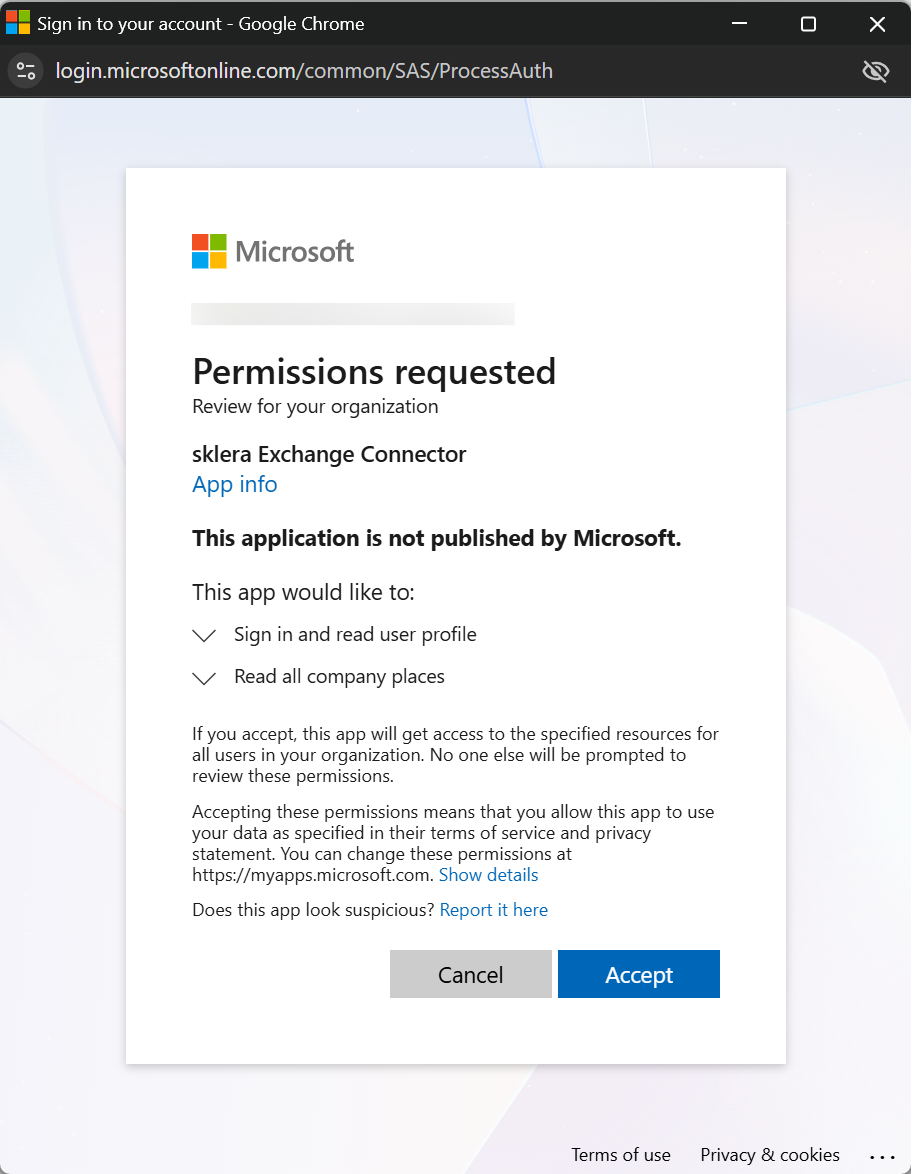
- Sign in with your Microsoft administrator account and accept the requested permissions.
1.3.3 Add or edit calendars
After the connection is established, you can select the authorized calendars in the sklera Room Manager.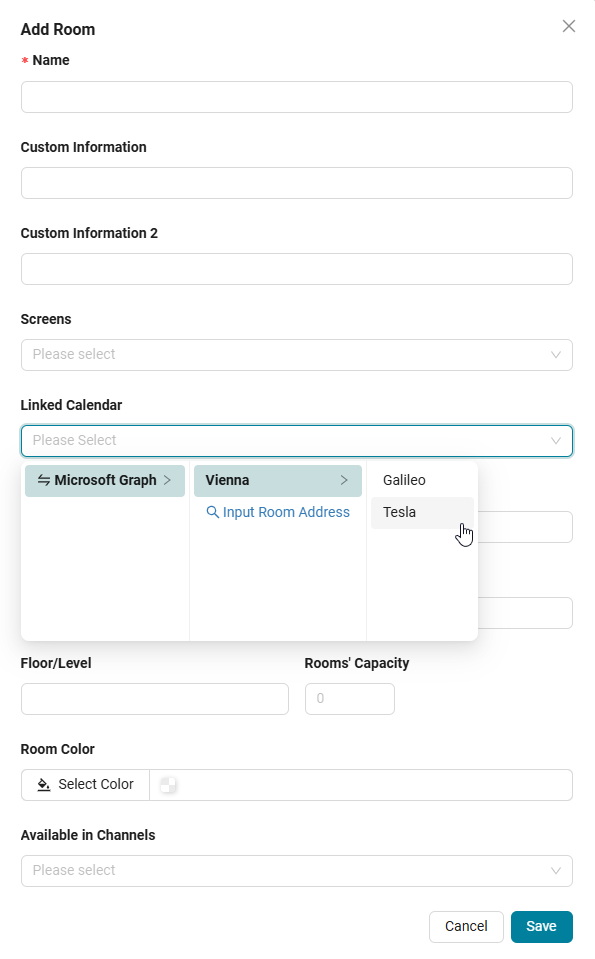
2. General notes
2.1 Resource mailboxes with AutoAccept enabled
If automatic acceptance of meeting requests is enabled for resource mailboxes in your Exchange environment, the meeting subject in the calendar is replaced by the organizer's name.
This is standard Exchange behavior and occurs because "AddOrganizerToSubject" and "DeleteSubject" are set to "True".
Solution: Open the Exchange Management Shell and run the following command:
Set-CalendarProcessing -Identity <RESOURCEMAILBOX> -DeleteSubject $False -AddOrganizerToSubject $False
Note
This setting applies only to new appointments, not to existing ones.
2.2 Subscribe to notifications from Microsoft Graph
In Room Manager, the “Subscribe to Notifications from Microsoft Graph” option can be enabled under “Connections & Settings” for the Microsoft Graph connection.

This feature enables Room Manager to detect and synchronize changes to calendar appointments in near real time.
Note
To receive notifications from Microsoft Graph, the appropriate firewall rules must be configured. Make sure that the required connections are allowed in your network.
For more information, see "Microsoft Graph Change Notifications" in the Microsoft documentation:
https://learn.microsoft.com/en-us/microsoft-365/enterprise/additional-office365-ip-addresses-and-urls?view=o365-worldwide
If you disable the slider, Exchange calendar appointments are not synchronized immediately. Instead, synchronization takes place at regular intervals of approximately 3 minutes.
3. Further external links
- Connect to Exchange Online PowerShell:
https://learn.microsoft.com/en-us/powershell/exchange/connect-to-exchange-online-powershell?view=exchange-ps - Create and manage room mailboxes:
https://learn.microsoft.com/en-us/exchange/recipients-in-exchange-online/manage-resource-mailboxes